Successful projects require proper planning, clear communication, and effective coordination between team members. Whether businesses are managing daily operations, launching new initiatives, or handling complex assignments, employees need the right skills to ensure that work is completed efficiently.
Without proper project management, teams may experience missed deadlines, unclear responsibilities, poor communication, and difficulties managing resources. These challenges can affect productivity and prevent businesses from achieving their objectives.
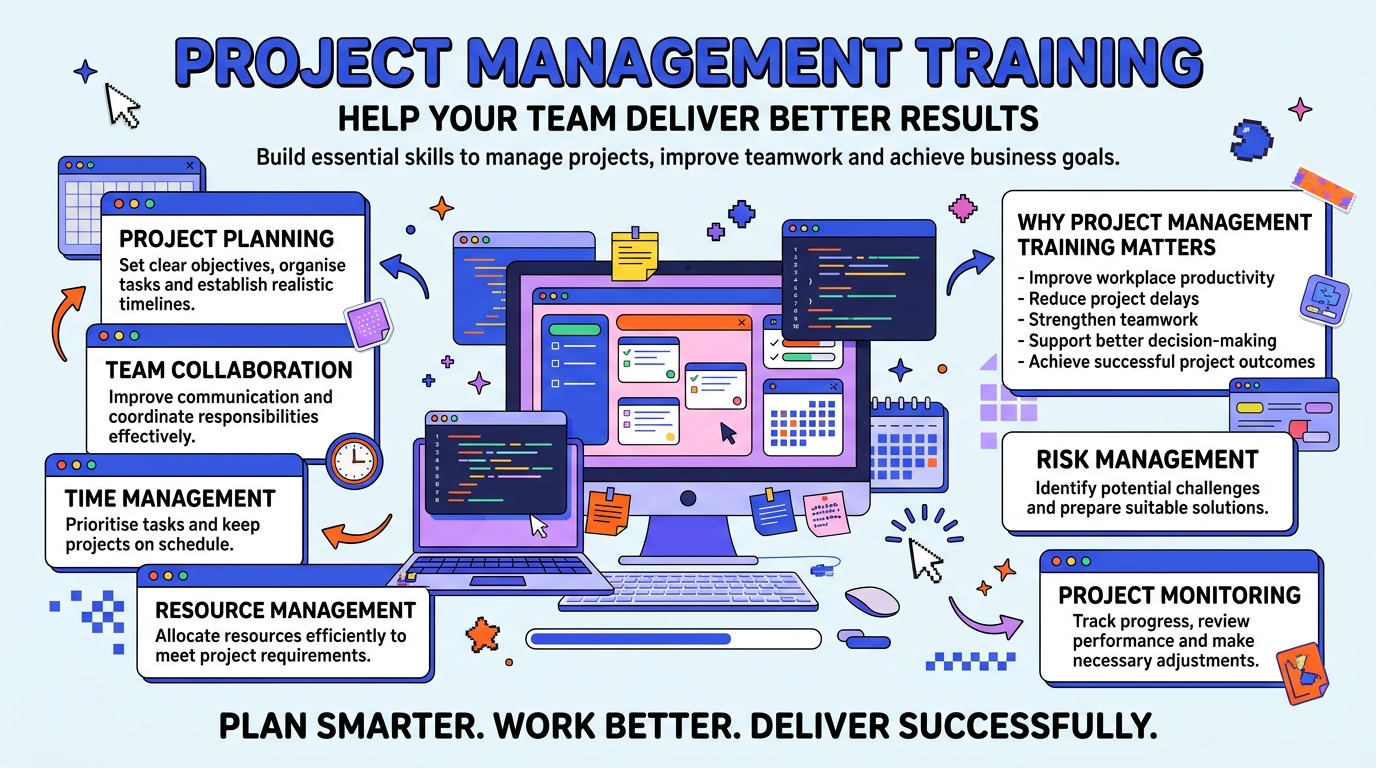
Project management training helps employees develop essential skills to plan, organise, and manage projects more effectively. With the right knowledge and practical techniques, teams can improve their workflows, manage challenges, and deliver better results.
What Is Project Management Training?
Project management training is a learning programme designed to help employees understand how to plan, organise, execute, and monitor projects.
It provides employees with practical knowledge of project management methods and techniques that can be applied to different workplace situations.
During project management training, employees may learn about:
-
Project planning and scheduling
-
Task allocation and coordination
-
Time management
-
Team communication
-
Resource management
-
Risk identification
-
Project monitoring and evaluation
The goal is to help employees manage project responsibilities more effectively while ensuring that activities remain aligned with business objectives.
Why Project Management Skills Are Important
Project management skills play an important role in maintaining organised and productive workplaces.
Employees often handle multiple responsibilities while working with different departments and stakeholders. Without proper coordination, tasks may overlap, deadlines may be missed, and important project information may not be communicated clearly.
Developing project management skills helps businesses:
-
Improve task organisation
-
Establish clear responsibilities
-
Manage deadlines effectively
-
Improve team communication
-
Reduce unnecessary delays
-
Monitor project progress
-
Achieve business objectives
When employees understand how to manage their responsibilities, teams can work more efficiently and maintain better control over project activities.
Improving Project Planning and Organisation
Proper planning is one of the most important parts of successful project management.
Before starting a project, teams need to understand the objectives, identify required tasks, allocate responsibilities, and establish realistic timelines.
Without a clear plan, employees may struggle to prioritise activities or understand what needs to be completed first.
Project management training helps employees develop better planning and organisational skills.
Important planning activities include:
-
Defining project objectives
-
Identifying project requirements
-
Preparing project schedules
-
Assigning tasks and responsibilities
-
Setting realistic deadlines
-
Monitoring project milestones
A well-organised project plan gives employees a clearer direction and helps teams work towards shared goals.
Improving Team Communication and Collaboration
Communication is essential when multiple employees are involved in completing a project.
Team members need to share updates, discuss requirements, provide feedback, and coordinate their responsibilities to ensure that activities are completed correctly.
Poor communication may result in misunderstandings, duplicated work, and unnecessary delays.
Project management training helps employees improve their communication and collaboration skills.
Effective teamwork can help businesses:
-
Reduce communication gaps
-
Improve coordination between departments
-
Establish clear responsibilities
-
Share project updates effectively
-
Resolve misunderstandings
-
Encourage better teamwork
When employees communicate effectively, teams can work together more smoothly and complete project activities with greater confidence.
Managing Project Time and Resources
Time and resource management are important for ensuring that projects are completed according to their planned schedules.
Businesses often work with limited resources, tight deadlines, and multiple project requirements. Without proper management, employees may struggle to prioritise tasks or allocate resources efficiently.
Project management training helps employees understand how to manage available resources and organise their workloads.
Important areas include:
-
Preparing realistic project timelines
-
Prioritising urgent tasks
-
Allocating resources appropriately
-
Monitoring task completion
-
Managing workloads
-
Identifying possible delays
Effective time and resource management helps teams maintain productivity while reducing unnecessary work and project disruptions.
Identifying and Managing Project Risks
Every project may face unexpected challenges that can affect its progress and overall performance.
These challenges may include changes in project requirements, limited resources, technical problems, budget constraints, or delays in completing important tasks.
Project management training helps employees understand how to identify potential risks and prepare suitable solutions before problems become more serious.
Common project risks include:
-
Delayed project activities
-
Poor resource allocation
-
Unclear project requirements
-
Communication breakdowns
-
Unexpected operational costs
-
Changes in project scope
-
Technical difficulties
Identifying risks early allows teams to make better decisions, adjust their plans, and reduce the impact of unexpected situations.
How Project Management Training Improves Team Productivity
Project management training helps employees develop better working habits and manage their responsibilities more effectively.
When employees understand how to organise tasks, establish priorities, and monitor progress, they can complete their work with greater efficiency.
Training also introduces practical methods that help teams coordinate activities and maintain better control over project schedules.
Improved project management skills can help teams:
-
Complete tasks more efficiently
-
Reduce unnecessary delays
-
Improve daily work organisation
-
Manage multiple responsibilities
-
Coordinate activities more effectively
-
Maintain consistent project progress
Better organisation allows employees to focus on important tasks and contribute more effectively towards project completion.
The Importance of Monitoring Project Progress
Monitoring project progress helps businesses understand whether activities are moving according to the original plan.
Without regular monitoring, teams may not recognise delays, resource issues, or performance problems until they begin affecting the entire project.
Project management training introduces employees to different ways of tracking project activities and evaluating progress.
These may include:
-
Reviewing completed tasks
-
Tracking project milestones
-
Monitoring deadlines
-
Evaluating team performance
-
Identifying project delays
-
Updating project schedules
Regular monitoring helps teams identify issues earlier and make adjustments when necessary.
Why Businesses Should Invest in Project Management Training
Investing in project management training helps businesses develop employees who can manage responsibilities, coordinate activities, and contribute towards organisational goals.
Employees with proper project management knowledge are better prepared to handle workplace challenges and support successful project execution.
Benefits include:
-
Improved employee productivity
-
Better communication and collaboration
-
More organised project planning
-
Effective time and resource management
-
Reduced project delays
-
Better problem-solving and decision-making
-
Improved project performance
-
Stronger employee capabilities
Developing these skills can help businesses create more organised teams and improve the way projects are managed.
Choosing the Right Project Management Training
Choosing suitable project management training is important to ensure employees develop skills that match their workplace responsibilities.
Businesses should consider their project requirements, employee experience levels, and the challenges their teams regularly encounter.
A suitable training programme should include practical topics such as project planning, time management, communication, resource allocation, and risk management.
When selecting a training provider, businesses should consider:
-
Experienced and qualified trainers
-
Relevant training materials
-
Practical workplace examples
-
Suitable learning objectives
-
Interactive training activities
-
Training content aligned with business needs
Training that focuses on practical applications helps employees understand how to use project management techniques in their daily work.
Long-Term Benefits of Project Management Training
Developing project management skills provides long-term benefits for both employees and organisations.
When employees understand how to manage projects effectively, businesses can improve their operational processes and build stronger teams.
Long-term benefits include:
✔ Better project planning
✔ Improved team collaboration
✔ More effective time management
✔ Reduced project delays
✔ Better resource utilisation
✔ Stronger problem-solving skills
✔ Improved workplace productivity
✔ More consistent project delivery
Continuous employee development helps businesses adapt to changing workplace requirements and manage future projects more effectively.
Conclusion
Project management training is an important investment for businesses that want to improve teamwork, productivity, and project performance. It helps employees develop essential skills in planning, communication, time management, resource allocation, and risk management.
Whether managing small assignments or larger business projects, employees with the right project management knowledge can work more effectively and contribute towards better outcomes.
By investing in employee development and practical project management training, Malaysian businesses can build stronger teams, improve workplace efficiency, and support long-term business growth.
FAQs
1. What is project management training?
Project management training is a learning programme that helps employees develop skills in planning, organising, executing, and monitoring projects. It covers important areas such as time management, communication, resource allocation, and risk management.
2. Why is project management training important for businesses?
Project management training helps businesses improve teamwork, organise responsibilities, manage deadlines, and reduce unnecessary project delays. It also helps employees develop the skills needed to complete projects more effectively.
3. Who should attend project management training?
Project managers, team leaders, supervisors, executives, and employees involved in coordinating or managing project activities can benefit from project management training.
4. What skills can employees develop through project management training?
Employees can develop project planning, time management, communication, problem-solving, resource management, risk assessment, and progress monitoring skills.
5. How does project management training improve project outcomes?
It helps employees establish clear objectives, organise tasks, manage resources, and monitor project progress. These practices support better coordination and help teams complete projects more efficiently.