
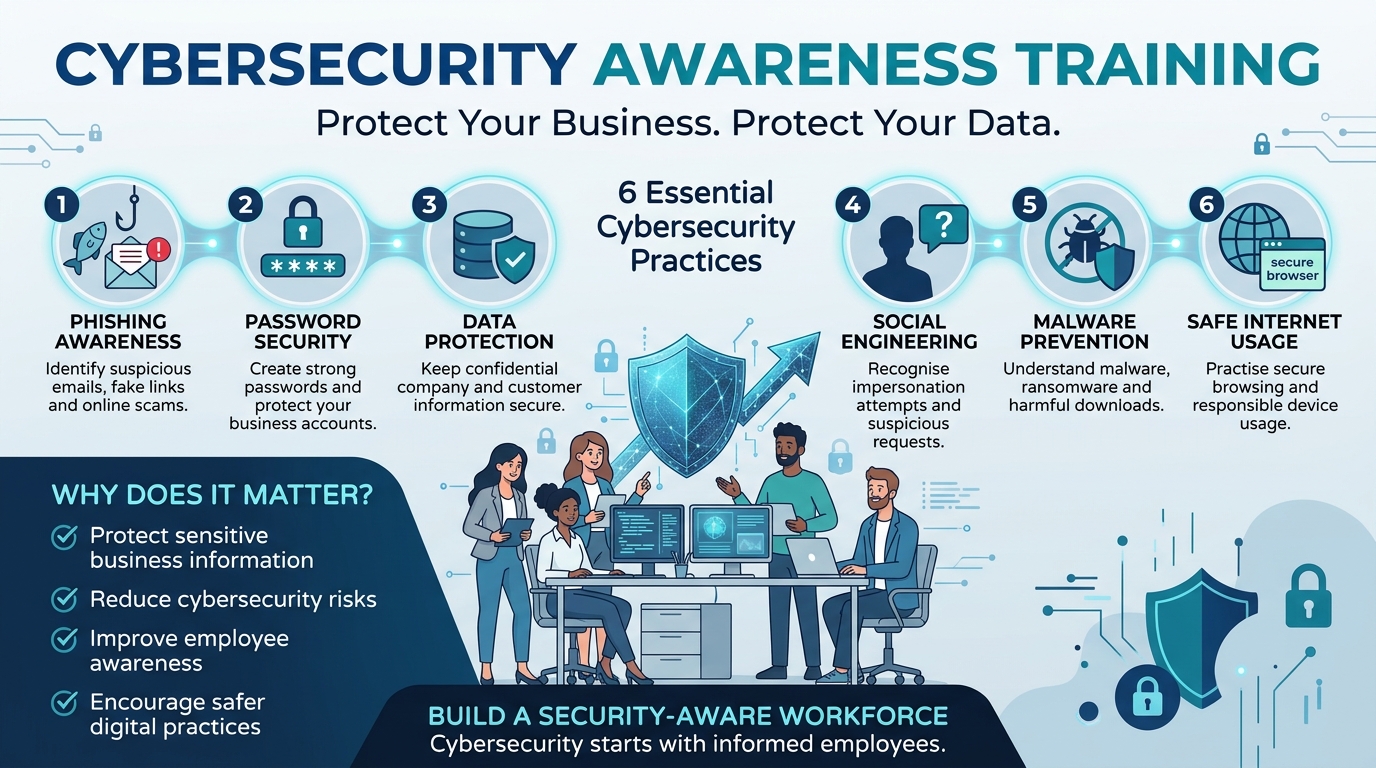
Businesses today rely on digital systems to manage information, communicate with customers, store documents, and carry out daily operations. However, increased use of digital technology also exposes businesses to cybersecurity threats such as phishing emails, malware, data breaches, and unauthorised access.
Cybersecurity awareness training helps employees understand these risks and develop safer digital practices when handling business information. For Malaysian companies, educating employees about cybersecurity is an important step towards protecting sensitive data and maintaining secure business operations.
What Is Cybersecurity Awareness Training?
Cybersecurity awareness training helps employees understand common cyber threats and how to protect themselves and their organisations when using digital technology.
During the training, employees learn about different cybersecurity practices, including:
- Phishing awareness
- Password management
- Email security
- Social engineering
- Malware and ransomware
- Data protection
- Safe internet browsing
- Multi-factor authentication (MFA)
The goal is to help employees recognise potential security risks and understand their responsibilities in protecting business information.
Why Cybersecurity Awareness Training Is Important
Cybersecurity threats can affect businesses of all sizes, especially organisations that depend on digital systems and online communication.
Employees who are unfamiliar with common cyber threats may accidentally expose confidential information, click suspicious links, or provide sensitive details to fraudulent individuals.
Regular cybersecurity awareness training helps businesses:
- Reduce human-related security risks
- Protect confidential business information
- Identify suspicious online activities
- Improve employee security practices
- Prevent common cybersecurity mistakes
- Encourage responsible technology usage
Developing employee awareness can help organisations establish a stronger approach to workplace cybersecurity.
Identifying Common Cybersecurity Threats
Understanding common cyber threats is an important part of improving workplace security.
Employees should be familiar with different types of cyberattacks, including:
- Phishing emails
- Malware infections
- Ransomware attacks
- Social engineering
- Password attacks
- Unauthorised system access
These threats can affect business systems, compromise sensitive information, and disrupt daily operations.
Cybersecurity awareness training helps employees understand how these attacks occur and what precautions they should take.
Improving Email and Phishing Security
Phishing is a common cyber threat where attackers use fraudulent emails or messages to trick individuals into revealing sensitive information or clicking malicious links.
Employees can learn how to:
- Identify suspicious email addresses
- Recognise unusual links and attachments
- Verify unexpected requests
- Avoid sharing confidential information through unverified emails
- Identify fraudulent messages
- Report suspected phishing attempts
Developing phishing awareness can help employees become more careful when handling business communications.
Strengthening Password and Account Security
Passwords protect access to business accounts, applications, and important information.
Weak passwords or reused login credentials can increase the risk of unauthorised access to company systems.
Cybersecurity training introduces employees to important security practices such as:
- Creating strong and unique passwords
- Avoiding password reuse
- Using password managers
- Enabling multi-factor authentication
- Avoiding password sharing
- Protecting login credentials
These practices can help businesses improve account security and reduce common password-related risks.
Protecting Business Data and Confidential Information
Businesses handle different types of sensitive information, including customer details, employee records, financial documents, and internal company information.
Without proper data protection practices, confidential information may be exposed or accessed by unauthorised individuals.
Employees should understand how to:
- Handle confidential business information
- Share files securely
- Manage document access
- Protect customer information
- Avoid unauthorised data sharing
- Follow company data protection policies
Proper information handling helps businesses maintain better data security practices.
Understanding Social Engineering Attacks
Social engineering involves manipulating individuals into revealing confidential information or performing actions that may compromise business security.
Cybercriminals may impersonate company representatives, suppliers, customers, or technical support personnel to gain access to sensitive information.
Employees should learn how to:
- Recognise impersonation attempts
- Verify unusual requests
- Identify suspicious phone calls and messages
- Avoid sharing confidential information without verification
- Follow internal approval procedures
- Report suspicious activities
Understanding these techniques can help employees make safer decisions when dealing with unexpected requests.
Improving Safe Internet and Device Usage
Employees regularly use computers, smartphones, online platforms, and business applications to complete their daily responsibilities.
Unsafe browsing habits or downloading files from untrusted sources can expose business devices and systems to security risks.
Cybersecurity awareness training can introduce employees to practices such as:
- Avoiding suspicious websites
- Downloading files from trusted sources
- Keeping software updated
- Using secure internet connections
- Locking devices when unattended
- Avoiding unknown USB devices
These practices help employees use workplace technology more safely.
Who Should Attend Cybersecurity Awareness Training?
Cybersecurity awareness training is suitable for employees across different departments because anyone who uses digital technology may encounter security threats.
It may benefit:
Administrative Professionals
Learn how to manage business emails, documents, and confidential information securely.
Human Resources Professionals
Understand how to protect employee records, recruitment information, and personal data.
Finance and Accounting Professionals
Recognise suspicious payment requests, fraudulent invoices, and financial scams.
Marketing Teams
Develop safer practices when managing social media accounts, digital platforms, and customer information.
IT Professionals
Strengthen their understanding of cybersecurity awareness and workplace security practices.
Business Owners and Managers
Understand common cybersecurity risks and encourage better security practices across the organisation.
When Should Businesses Conduct Cybersecurity Awareness Training?
Cybersecurity awareness should be developed continuously rather than treated as a one-time learning activity.
Businesses should consider providing training when:
- New employees join the organisation
- Employees begin using new digital systems
- New cybersecurity threats emerge
- Employees handle sensitive business information
- Security policies or procedures change
- Suspicious activities or security incidents occur
Regular training helps employees stay familiar with cybersecurity practices and understand changing online threats.
Long-Term Benefits of Cybersecurity Awareness Training
Investing in cybersecurity awareness training provides several benefits for businesses.
Benefits include:
✔ Improved employee cybersecurity knowledge
✔ Better protection of confidential information
✔ Reduced human-related security risks
✔ Stronger password and email practices
✔ Increased awareness of online threats
✔ Better understanding of security procedures
✔ More responsible technology usage
✔ A stronger workplace security culture
Combining employee training with appropriate cybersecurity systems and security procedures can help organisations maintain safer business operations.
Choosing a Cybersecurity Training Provider in Malaysia
When selecting a cybersecurity training provider, businesses should consider programmes that offer relevant knowledge and practical learning opportunities.
Important factors include:
- Experienced trainers with relevant cybersecurity knowledge
- Comprehensive course content
- Practical exercises and real-world scenarios
- Training suitable for different employee skill levels
- Relevant workplace security topics
- Clear learning objectives
- Suitable training materials and support
Choosing the right programme can help employees develop practical cybersecurity knowledge and apply safer digital practices in their daily responsibilities.
Conclusion
Cybersecurity awareness training is an important part of helping businesses protect their digital systems, confidential information, and daily operations. It helps employees recognise common cyber threats, identify suspicious activities, and follow safer online practices.
Whether for small businesses or larger organisations, developing employee cybersecurity knowledge can help reduce avoidable security risks and encourage a more security-conscious workplace.
By investing in relevant training and promoting responsible technology usage, Malaysian businesses can strengthen their approach to cybersecurity and better prepare employees for changing digital threats.
FAQs
1. What is cybersecurity awareness training?
Cybersecurity awareness training is a learning programme that helps employees understand common cyber threats and develop safer digital practices. It covers topics such as phishing, password security, data protection, and safe internet usage.
2. Why is cybersecurity awareness training important for businesses?
It helps employees recognise potential cyber threats, protect sensitive information, and avoid common security mistakes. This can reduce human-related security risks and support safer business operations.
3. Who should attend cybersecurity awareness training?
Employees from all departments can benefit from cybersecurity awareness training, including administrative staff, HR professionals, finance teams, marketing employees, IT personnel, and business managers.
4. How often should employees receive cybersecurity training?
Cybersecurity awareness should be reinforced regularly. Businesses can arrange periodic training and provide additional guidance whenever new threats, technologies, or security procedures are introduced.
5. What topics are covered in cybersecurity awareness training?
Common topics include phishing awareness, password management, email security, social engineering, malware prevention, data protection, multi-factor authentication, and safe internet browsing.