
Businesses today rely on data to understand performance, identify opportunities, and make better decisions. From sales reports and customer information to financial records and operational data, organisations generate large amounts of information every day.
However, collecting data is only part of the process. Employees also need the right skills to analyse information, identify meaningful trends, and turn data into useful business insights. This is where business intelligence training can help businesses improve their data analysis capabilities and make more informed decisions.
What Is Business Intelligence Training?
Business intelligence training helps employees develop the skills needed to collect, analyse, interpret, and present business data.
It introduces participants to different tools, techniques, and methods used to transform raw data into meaningful information that supports business planning and decision-making.
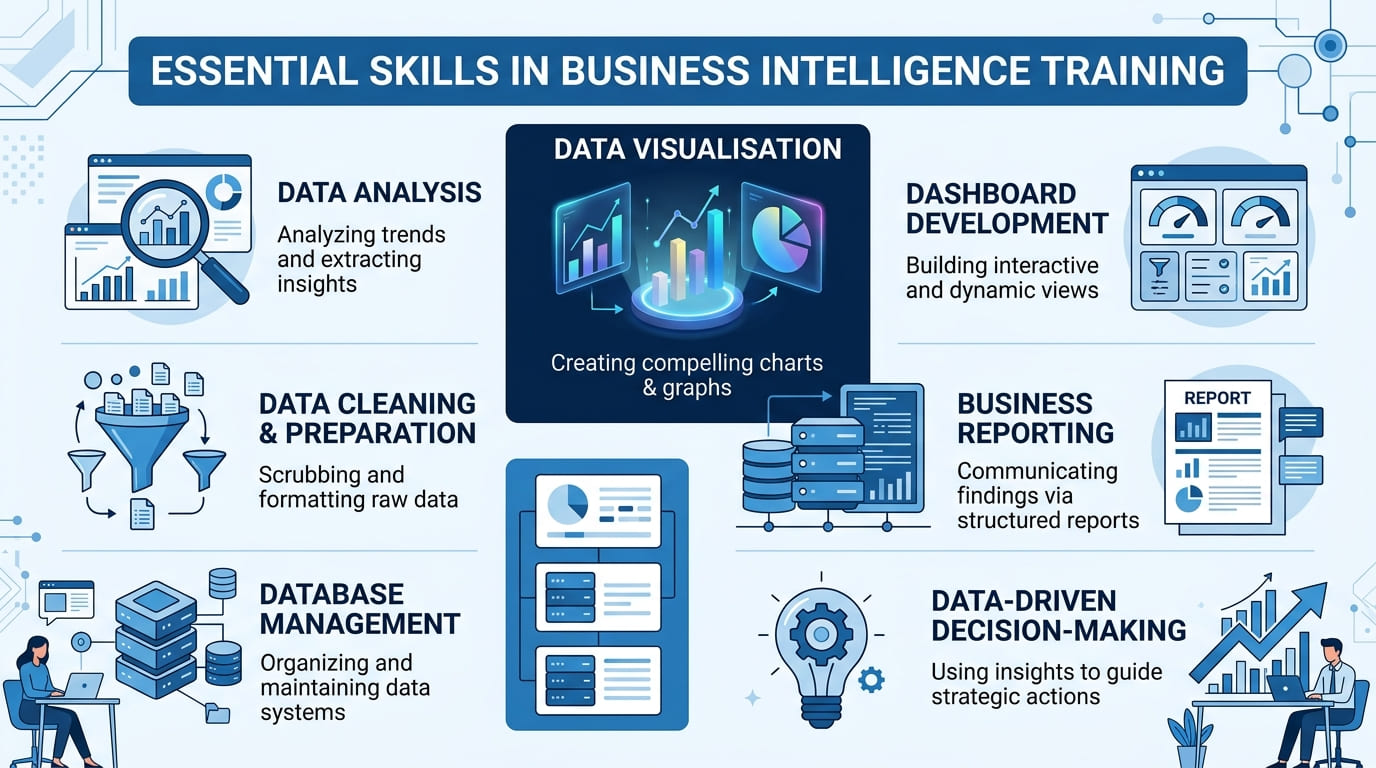
Business intelligence training can cover areas such as:
-
Data analysis
-
Data visualisation
-
Data cleaning and preparation
-
Database management
-
Business reporting
-
Dashboard development
-
Data-driven decision-making
-
Business performance monitoring
These skills help employees understand business information more effectively and use data to support organisational objectives.
Why Is Business Intelligence Training Important?
As businesses become more data-driven, employees need to understand how to work with information accurately and efficiently.
Without the right skills, businesses may struggle to identify important trends, prepare reports, or understand what their performance data reveals.
For Malaysian businesses, business intelligence training can help address common challenges such as manual reporting, inconsistent data, limited analytical capabilities, and difficulties interpreting business performance.
Training can help employees develop the knowledge needed to work with data more confidently and support better business decisions.
Develop Data Analysis Skills
Data analysis is one of the most important skills covered in business intelligence training.
It involves examining business information to identify patterns, understand performance, and discover opportunities for improvement.
Employees can learn how to:
-
Analyse sales and financial data
-
Identify trends and patterns
-
Compare business performance
-
Interpret key performance indicators
-
Identify unusual changes in data
-
Draw meaningful conclusions from information
These skills help businesses understand what is happening within their operations and identify areas that may require further attention.
Learn Data Visualisation and Dashboard Development
Business information can be difficult to understand when presented in large spreadsheets or complicated reports.
Data visualisation helps simplify information by presenting it through charts, graphs, tables, and interactive dashboards.
Business intelligence training may introduce employees to tools such as Microsoft Power BI, Tableau, and Microsoft Excel, depending on the course content.
Participants can learn how to:
-
Create charts and graphs
-
Build interactive dashboards
-
Present key performance indicators
-
Organise reports clearly
-
Highlight important business trends
-
Communicate findings through visual reports
These skills can help businesses present information more clearly and make it easier for managers to monitor performance.
Understand Data Cleaning and Preparation
Before data can be analysed, it needs to be accurate, consistent, and properly organised.
Business information may contain duplicate records, missing values, inconsistent formats, or errors that affect reporting results.
Business intelligence training can help employees learn how to prepare data for analysis.
This may include:
-
Removing duplicate records
-
Correcting inconsistent data formats
-
Handling missing information
-
Combining data from different sources
-
Checking data accuracy
-
Organising datasets for reporting
Proper data preparation helps improve the reliability of reports and reduces the risk of making decisions based on inaccurate information.
Build Database and Data Management Skills
Businesses often store information across multiple systems, databases, and spreadsheets.
Understanding how data is organised and accessed can help employees work more efficiently with business information.
Depending on the programme, business intelligence training may cover database fundamentals, data relationships, and basic SQL queries.
These skills can help employees:
-
Understand how business data is structured
-
Retrieve relevant information from databases
-
Work with multiple datasets
-
Organise information for analysis
-
Improve data accessibility
-
Support more consistent reporting processes
The level of technical knowledge required depends on the employee’s role and the objectives of the training programme.
Improve Business Reporting Skills
Business reports help organisations monitor performance, evaluate progress, and communicate important findings.
However, effective reporting requires more than presenting numbers. Employees need to understand which information matters and how it relates to business objectives.
Business intelligence training can help participants develop reporting skills such as:
-
Preparing business performance reports
-
Monitoring key performance indicators
-
Comparing actual results with targets
-
Identifying performance gaps
-
Summarising important findings
-
Presenting information to management
For example, a sales team may use business intelligence reports to monitor monthly revenue, compare product performance, and identify opportunities to improve sales results.
Strengthen Data-Driven Decision-Making
Business intelligence helps employees use evidence and analysis to support business decisions rather than relying entirely on assumptions.
Training can help participants develop critical thinking skills by teaching them how to interpret findings, evaluate trends, and investigate unexpected results.
These skills can help businesses:
-
Identify opportunities for improvement
-
Understand changes in business performance
-
Evaluate operational efficiency
-
Support business planning
-
Make informed decisions
-
Develop strategies based on available data
By combining analytical thinking with reliable information, employees can provide more useful insights to support business growth.
Who Should Attend Business Intelligence Training?
Business intelligence training can benefit employees who regularly work with data, prepare reports, or contribute to business decisions.
It may be suitable for:
Business Analysts
Develop analytical skills to identify trends, evaluate performance, and communicate business insights.
Finance and Accounting Professionals
Improve financial reporting, budget monitoring, and expenditure analysis.
Sales and Marketing Teams
Analyse sales performance, campaign results, and customer-related data.
Operations Managers
Monitor productivity, identify inefficiencies, and evaluate operational performance.
IT Professionals
Develop knowledge of data management, reporting systems, and business intelligence tools.
Business Owners and Managers
Understand business performance reports and use relevant information to support planning and decision-making.
The most suitable training programme depends on participants’ existing skills, responsibilities, and business requirements.
How to Choose Business Intelligence Training in Malaysia
When looking for business intelligence training in Malaysia, businesses should consider whether the programme matches their employees’ skill levels and organisational goals.
Important factors to consider include:
-
Course content: Check whether the programme covers data analysis, visualisation, reporting, and other relevant skills.
-
Practical exercises: Look for hands-on activities that allow participants to apply what they learn.
-
Training level: Choose a programme suitable for beginners or employees with existing analytical experience.
-
Software and tools: Review whether the training covers tools relevant to your business, such as Power BI, Excel, or SQL.
-
Business relevance: Consider how the skills can be applied to actual reporting and operational requirements.
-
Training support: Evaluate the learning materials, guidance, and opportunities for practical application.
Choosing suitable training can help employees develop relevant skills and apply their knowledge more effectively in the workplace.
How Business Intelligence Skills Support Business Growth
Business intelligence skills can help organisations improve the way they manage and use information.
Employees who understand data analysis and reporting can help reduce manual reporting tasks, identify performance trends, and provide clearer insights to management.
Businesses may also benefit from more consistent reporting practices across departments, making it easier to evaluate performance and identify areas for improvement.
For Malaysian businesses, developing business intelligence capabilities can support better planning, improve operational visibility, and encourage a more informed approach to business decisions.
The effectiveness of these skills depends on the quality of the available data, the tools used, and how well the analysis supports actual business objectives.
Conclusion
Business intelligence training helps employees develop essential skills in data analysis, visualisation, data preparation, database management, reporting, and decision-making.
These capabilities allow businesses to transform raw information into useful insights, monitor performance more effectively, and make informed decisions based on reliable data.
For Malaysian businesses looking to strengthen their data capabilities, investing in relevant training can help employees work more confidently with business information and support long-term organisational growth.
As businesses continue to rely on data to guide their strategies, business intelligence skills can become an important part of developing a more productive and data-driven workplace.
FAQs
1. What is business intelligence training?
Business intelligence training is a programme that helps employees develop the skills needed to collect, analyse, interpret, and present business data. It covers areas such as data analysis, data visualisation, data preparation, database management, reporting, and data-driven decision-making.
2. Who should attend business intelligence training?
Business intelligence training is suitable for employees who regularly work with data or contribute to business decisions. This includes business analysts, finance and accounting professionals, sales and marketing teams, operations managers, IT professionals, and business owners or managers.
3. What skills are covered in business intelligence training?
Common skills covered include data analysis, data visualisation, dashboard development, data cleaning and preparation, database management, business reporting, performance monitoring, and data-driven decision-making.
4. Do I need technical experience to join business intelligence training?
Not necessarily. Many programmes are designed for beginners, while others are suited for employees with existing analytical experience. The most suitable level depends on your current skills, role, and business requirements.
5. What tools are used in business intelligence training?
Depending on the course content, training may cover tools such as Microsoft Power BI, Tableau, Microsoft Excel, and basic SQL. Some programmes also introduce database fundamentals and data management concepts.