
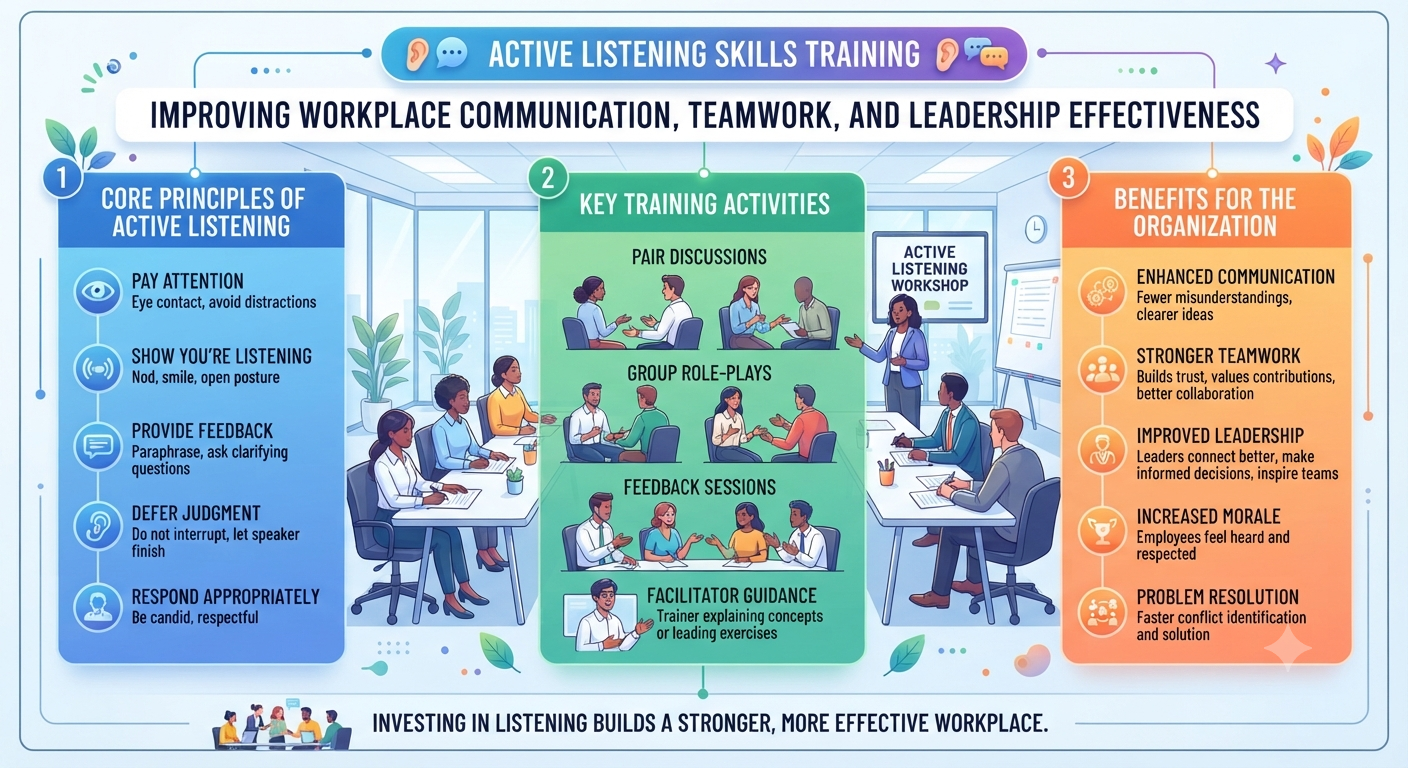
Clear communication is one of the foundations of a successful workplace. While many people focus on speaking confidently or presenting ideas effectively, listening is just as important. Active listening is the ability to fully concentrate, understand, and respond thoughtfully to what another person is saying. It helps reduce misunderstandings, strengthens professional relationships, and creates a more collaborative work environment.
Active listening goes beyond simply hearing words—it involves understanding the speaker’s message, emotions, and intent. When employees practice non-verbal engagement through eye contact and open posture, offer brief verbal encouragements, and paraphrase key points to confirm mutual understanding, they drastically reduce operational errors and duplicated effort. In fast-paced business environments, this level of focused comprehension creates a foundation of psychological safety where team members feel comfortable voicing innovative ideas, flagging potential risks early, and engaging in constructive conflict resolution.
Ultimately, minimizing digital distractions and intentionally pausing before replying allows professionals to navigate high-stakes conversations with greater empathy, driving both team cohesion and long-term organizational success.
What Is Active Listening?
Active listening requires full concentration on the speaker’s words, tone, and intent before responding. By minimizing distractions, maintaining open body language, and paraphrasing main points to confirm understanding, you eliminate costly miscommunications. This deliberate practice builds trust, resolves conflicts, and fosters deeper, more collaborative relationships in any professional environment.
It involves:
- Paying full attention
- Avoiding interruptions
- Asking thoughtful questions
- Clarifying information
- Responding respectfully
Unlike passive listening, active listening encourages meaningful communication and mutual understanding.
Reduce Workplace Misunderstandings
Poor communication is the silent catalyst behind missed deadlines, strained team dynamics, and costly project re-works across modern organizations. While speaking clearly is often prioritized, true operational alignment relies far more heavily on how effectively team members receive and digest critical information. Active listening provides the essential framework for bridging these interpersonal gaps, serving as a vital skill that transforms passive hearing into actionable, high-value understanding.
Active listening helps employees:
- Understand instructions clearly
- Avoid assumptions
- Clarify expectations
- Reduce communication errors
- Complete tasks more accurately
Listening carefully the first time can prevent unnecessary mistakes and improve productivity.
Build Stronger Team Relationships
When colleagues feel truly understood during daily interactions, workplace dynamics shift from transactional exchanges to genuine partnerships. By stepping back from internal distractions and prioritizing focused attention over immediate counterarguments, employees signal that their peers’ insights hold real weight. This intentional practice lays the groundwork for shared accountability, higher morale, and seamless cross-functional alignment.
Employees who feel heard are more likely to trust and respect their colleagues.
Active listening helps teams:
- Build mutual respect
- Strengthen collaboration
- Encourage open communication
- Improve teamwork
- Create positive working relationships
When employees know their opinions are valued, they become more engaged in team discussions.
Improve Problem-Solving Skills
Active listening serves as the critical bridge between conflicting opinions and sound judgment, allowing professionals to strip away personal bias, absorb complex data, and evaluate every angle of a situation before acting.
Many workplace challenges require employees to understand different viewpoints before making decisions.
Active listening allows team members to:
- Gather complete information
- Understand multiple perspectives
- Identify the root cause of problems
- Develop better solutions
- Make informed decisions
Better listening often leads to more effective problem-solving.
Support Better Leadership
When leaders cultivate genuine attentiveness, they replace top-down authority with authentic engagement, turning routine managerial interactions into opportunities for professional growth. By prioritizing empathetic comprehension over quick, reactive answers, managers demonstrate that their team’s insights and well-being are vital to the organization’s broader mission.
Managers who actively listen create a more supportive working environment.
Good leaders use active listening to:
- Understand employee concerns
- Provide meaningful feedback
- Resolve workplace issues
- Build employee confidence
- Encourage continuous improvement
Employees are more likely to communicate openly when they know their managers genuinely listen.
Reduce Workplace Conflict
In high-pressure environments, the rush to defend one’s stance frequently eclipses the necessity of understanding the opposing view, turning minor misalignments into costly disputes. Active listening acts as a critical circuit breaker in these moments, slowing down reactive impulses and establishing a foundation where calm, objective dialogue can take root.
Misunderstandings often lead to unnecessary disagreements.
Active listening helps by:
- Allowing everyone to express their views
- Preventing interruptions
- Encouraging respectful discussions
- Finding common ground
- Resolving issues professionally
Listening before responding helps reduce tension and promotes healthier workplace relationships.
Increase Employee Engagement
When an organization prioritizes genuine dialogue over top-down directives, it transforms passive workers into invested collaborators who actively drive success. By treating every voice as a critical contribution to the company’s vision, leaders create an environment where enthusiasm is contagious and initiative is the norm.
Employees who feel listened to are generally more motivated to contribute.
Active listening encourages:
- Greater participation
- More idea sharing
- Higher job satisfaction
- Better collaboration
- Stronger workplace morale
A culture of listening helps employees feel respected and appreciated.
Improve Customer Communication
In an era where automated responses and rushed service can make interactions feel transactional, attentive human connection stands out as a powerful competitive advantage. When representatives take the time to fully digest client feedback rather than working from a rigid script, they demonstrate genuine empathy and professionalism, turning routine touchpoints into lasting client partnerships.
Active listening is valuable not only within teams but also when interacting with customers.
Employees who listen carefully can:
- Better understand customer needs
- Respond more accurately
- Solve problems faster
- Build customer trust
- Improve service quality
This leads to better customer experiences and stronger business relationships.
Simple Ways to Practice Active Listening
While developing these skills takes intentional practice, embedding small, practical adjustments into daily routines transforms passive hearing into an active, high-value habit that pays dividends across every professional conversation.
Employees can improve their listening skills by:
- Maintaining eye contact
- Avoiding distractions
- Letting others finish speaking
- Asking clarifying questions
- Summarising key points before responding
These small habits can significantly improve workplace communication over time.
Why Businesses Should Invest in Active Listening Training
By equipping teams with specific behavioral frameworks, companies systematically remove operational friction, accelerate project execution, and lay a permanent foundation for sustainable business growth.
Training employees in active listening provides long-term benefits, including:
- Better workplace communication
- Stronger teamwork
- Improved leadership skills
- Reduced workplace conflict
- Higher employee engagement
- Increased productivity
Organisations that develop strong listening skills often create more positive, collaborative, and efficient workplaces.
Conclusion
Active listening is one of the most valuable communication skills in any workplace. By listening with attention, empathy, and respect, employees and leaders can reduce misunderstandings, strengthen relationships, improve teamwork, and solve problems more effectively.
Investing in active listening skills helps organisations build a workplace culture where communication is clear, collaboration is stronger, and employees feel valued, ultimately contributing to long-term business success.
Ultimately, organizations that master active listening create an environment where trust flourishes and operational excellence becomes second nature. By continuously prioritizing attentive focus, genuine empathy, and intentional communication, businesses safeguard their brand reputation, retain top talent, and build a resilient foundation for long-term strategic growth.
FAQs
1. What is the main difference between active listening and passive listening?
Active listening requires full concentration, understanding, observing non-verbal cues, and thoughtfully clarifying information before responding. Passive listening merely involves hearing words without fully processing the speaker’s intent, emotions, or message, which often leads to costly misunderstandings and duplicated effort.
2. How does active listening reduce workplace errors and miscommunication?
By eliminating internal distractions, avoiding assumptions, and paraphrasing key points back to the speaker, employees confirm mutual understanding. Listening carefully the first time ensures instructions are understood clearly, reducing unnecessary mistakes and project re-works.
3. In what ways does active listening improve team problem-solving?
Active listening enables professionals to set aside personal bias, absorb complex data, and gather complete information. By taking the time to understand multiple perspectives and uncover the root cause of issues, teams can develop better, more effective solutions together.
4. How can active listening help de-escalate and resolve workplace conflicts?
In high-pressure situations, active listening acts as a circuit breaker by slowing down reactive impulses. It allows everyone to express their views without interruption, encourages respectful dialogue, and helps opposing parties find common ground to resolve issues professionally.
5. What are some simple habits employees can practice to listen better every day?
Employees can instantly improve their active listening by maintaining eye contact, minimizing digital distractions, letting others finish speaking without interruption, asking clarifying questions, and intentionally pausing to summarize key points before replying.