Conflict is an inevitable component of any dynamic workplace, arising naturally whenever diverse individuals come together to achieve shared goals. Because employees possess distinct personalities, communication styles, backgrounds, and problem-solving strategies, differences of opinion are bound to surface during daily operations.
However, friction itself is not inherently damaging—how disagreements are identified, navigated, and resolved dictates whether they escalate into operational bottlenecks or serve as valuable opportunities for organizational innovation and personal growth. Without structured tools to address friction, unmanaged tension can quickly erode trust, disrupt workflow momentum, and weaken team cohesion.
Conflict resolution training addresses this vulnerability by equipping both employees and leaders with practical, actionable skills to navigate disagreements professionally, enhance interpersonal communication, and sustain strong working relationships. Rather than allowing interpersonal friction to linger and compromise overall productivity, proactive skill-building enables organizations to transform tense situations into constructive, collaborative dialogues.
Ultimately, investing in conflict resolution training fosters a resilient workplace culture where challenges are confronted transparently, individual perspectives are respected, and teams build the psychological safety needed to thrive together long-term.
Why Workplace Conflict Happens
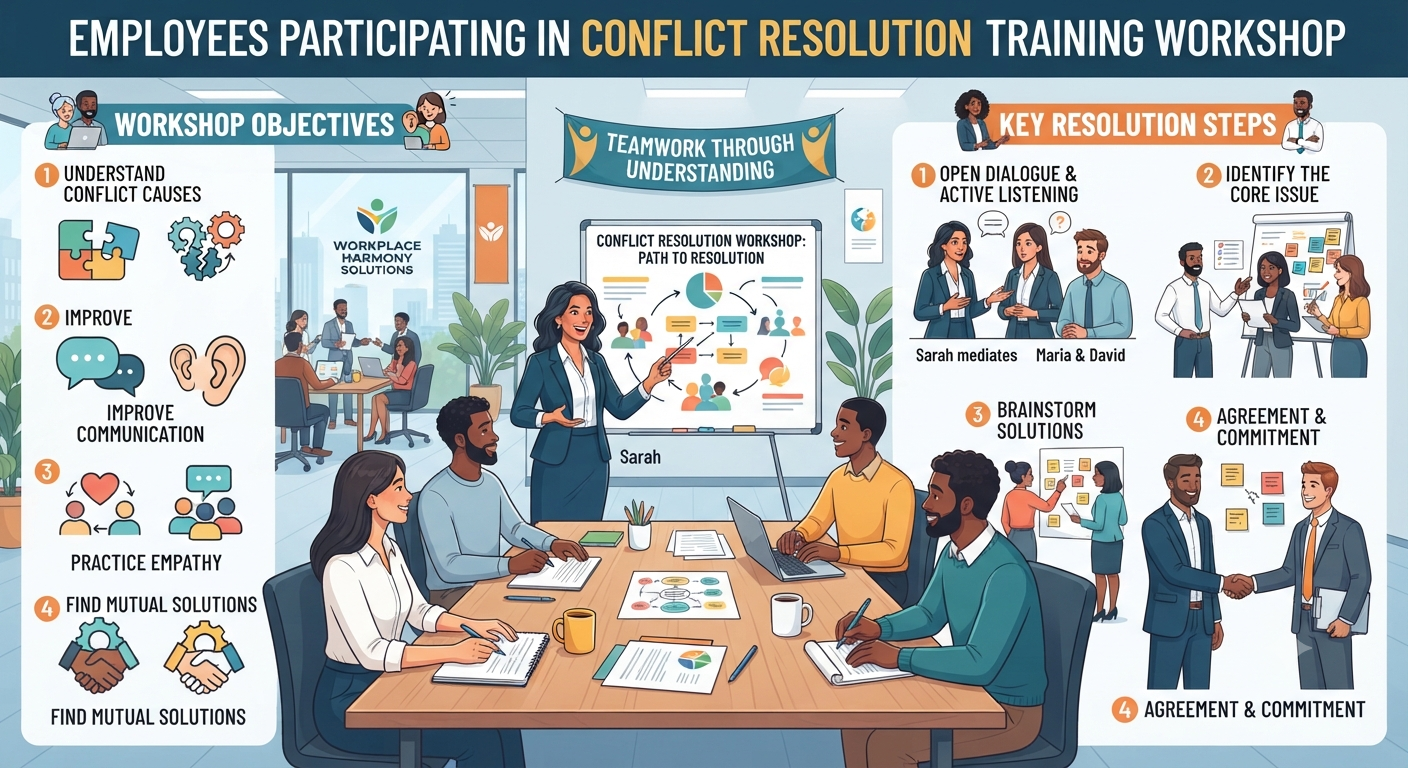
Workplace friction is a natural byproduct of diverse teams collaborating under pressure. Because employees bring different backgrounds and work habits to daily tasks, minor friction is bound to occur. Understanding the root causes of tension helps teams spot early warning signs and address issues before they disrupt team morale.
Conflict can arise for many reasons, including:
- Different communication styles
- Misunderstandings
- Conflicting priorities
- Workplace stress
- Personality differences
- Unclear expectations
Although conflict cannot always be avoided, employees who know how to manage disagreements effectively are better prepared to maintain healthy professional relationships.
Improve Communication Between Team Members
Communication breakdowns are at the root of most workplace friction, turning simple misunderstandings into ongoing tension. Conflict resolution training equips employees with the dialogue skills needed to address issues calmly and clearly before they derail collaboration.
Many workplace conflicts begin with poor communication.
Conflict resolution training helps employees:
- Listen actively
- Express ideas respectfully
- Give constructive feedback
- Understand different viewpoints
- Reduce misunderstandings
Better communication creates stronger collaboration and helps prevent small issues from becoming major problems.
Build Stronger Workplace Relationships
Strong interpersonal connections thrive when team members feel safe expressing differing viewpoints without fear of damaging professional relationships. Conflict resolution training provides the tools to replace defensiveness with open dialogue, building a foundation of psychological safety.
Healthy workplace relationships are built on trust, respect, and understanding.
Training encourages employees to:
- Work together more effectively
- Respect different opinions
- Handle disagreements professionally
- Build mutual trust
- Strengthen teamwork
When employees feel respected, they are more likely to work together toward shared goals.
Reduce Workplace Stress
Unmanaged friction quickly turns daily work into an uncomfortable, high-stress environment. Conflict resolution skills allow employees to de-escalate emotional moments and confront problems directly, keeping small disagreements from spoiling the team culture.
Unresolved conflict often creates unnecessary tension in the workplace.
By learning practical conflict management techniques, employees can:
- Stay calm during disagreements
- Address issues early
- Reduce workplace tension
- Create a more positive work environment
A supportive workplace contributes to better employee wellbeing and morale.
Encourage Better Problem-Solving
Friction doesn’t have to be destructive—when managed properly, opposing views trigger critical thinking and ignite creative problem-solving. Conflict resolution training shifts mindsets from “winning an argument” to “solving a puzzle together,” turning diverse opinions into an engine for innovation.
Different opinions can often lead to better ideas when managed properly.
Conflict resolution training teaches employees to:
- Focus on solutions instead of blame
- Understand different perspectives
- Work together to resolve challenges
- Make balanced decisions
This approach encourages collaboration instead of competition.
Develop Leadership Skills
Leaders are often called to step in when team friction spills over into daily operations. Conflict resolution training equips managers with impartial facilitation skills, ensuring they act as constructive mediators rather than referees taking sides.
Managers and supervisors regularly handle workplace disagreements.
Conflict resolution training helps leaders:
- Facilitate productive conversations
- Resolve disputes fairly
- Support employee relationships
- Build team trust
- Maintain a positive workplace culture
Strong leaders create environments where employees feel comfortable discussing concerns before conflicts escalate.
Improve Team Productivity
Unresolved friction eats away at focus, pulling valuable time and energy away from strategic objectives. Investing in structured resolution tools minimizes daily disruptions and redirects your team’s energy back toward high-impact performance.
When conflicts remain unresolved, they can affect teamwork and overall performance.
Organizations that invest in conflict resolution training often experience:
- Better collaboration
- Improved communication
- Higher employee engagement
- Faster problem-solving
- More productive teams
Employees spend less time dealing with conflict and more time focusing on achieving business goals.
Create a Positive Workplace Culture
A healthy organizational culture isn’t one where friction never happens; it’s one where disagreements are met with maturity, curiosity, and shared respect. By embedding resolution skills across all levels, companies turn potential divides into pillars of continuous cultural growth.
A positive workplace culture encourages open communication and mutual respect.
Conflict resolution training helps organizations build a culture where employees:
- Respect one another
- Communicate openly
- Work collaboratively
- Handle disagreements professionally
- Support continuous improvement
This creates a healthier working environment for everyone.
Why Businesses Invest in Conflict Resolution Training
Investing in soft skills delivers hard returns, laying the framework for an agile, high-trust workforce. When organizations prioritize dispute resolution capabilities, they eliminate costly workplace friction and pave the way for sustainable operational success.
Many organizations recognise that strong interpersonal skills are essential for long-term success.
Conflict resolution training can help businesses:
- Strengthen workplace relationships
- Improve employee communication
- Reduce workplace tension
- Build stronger leadership
- Increase productivity
- Foster a more collaborative culture
Investing in these skills benefits both employees and the organisation as a whole.
Conclusion
Conflict is a normal part of working with people, but it does not have to harm workplace relationships. With the right training, employees can communicate more effectively, resolve disagreements professionally, and build stronger connections with their colleagues.
By investing in conflict resolution training, organizations create a more respectful, collaborative, and productive workplace where employees can work together confidently and achieve long-term success.
Ultimately, proactive conflict management isn’t just about preventing friction—it’s about building resilient teams capable of thriving through any challenge.
FAQs
1. What are the main causes of workplace conflict?
Workplace friction typically arises when diverse employees collaborate under pressure. Common causes include differing communication styles, misunderstandings, conflicting priorities, workplace stress, personality differences, and unclear expectations.
2. How does conflict resolution training help improve communication?
The training equips employees with practical dialogue skills to address issues clearly and calmly before they escalate. It helps staff actively listen, express ideas respectfully, give constructive feedback, understand differing viewpoints, and reduce misunderstandings.
3. In what ways can conflict resolution training foster better problem-solving?
Rather than letting disagreements turn destructive, the training shifts employee mindsets from trying to “win an argument” to “solving a puzzle together”. It teaches staff to focus on solutions instead of blame, understand opposing perspectives, resolve challenges collaboratively, and make balanced decisions.
4. How does training equip leaders and managers to handle team disputes?
Conflict resolution training provides managers with impartial facilitation skills so they can mediate fairly rather than acting as referees taking sides. It helps leaders facilitate productive conversations, resolve disputes equitably, build team trust, and sustain a positive workplace culture.
5. What are the long-term benefits of businesses investing in conflict resolution training?
Investing in structured dispute resolution helps businesses strengthen workplace relationships, reduce employee stress, improve communication, and boost overall team productivity. It enables organizations to build a positive, collaborative culture where disagreements are handled professionally.