
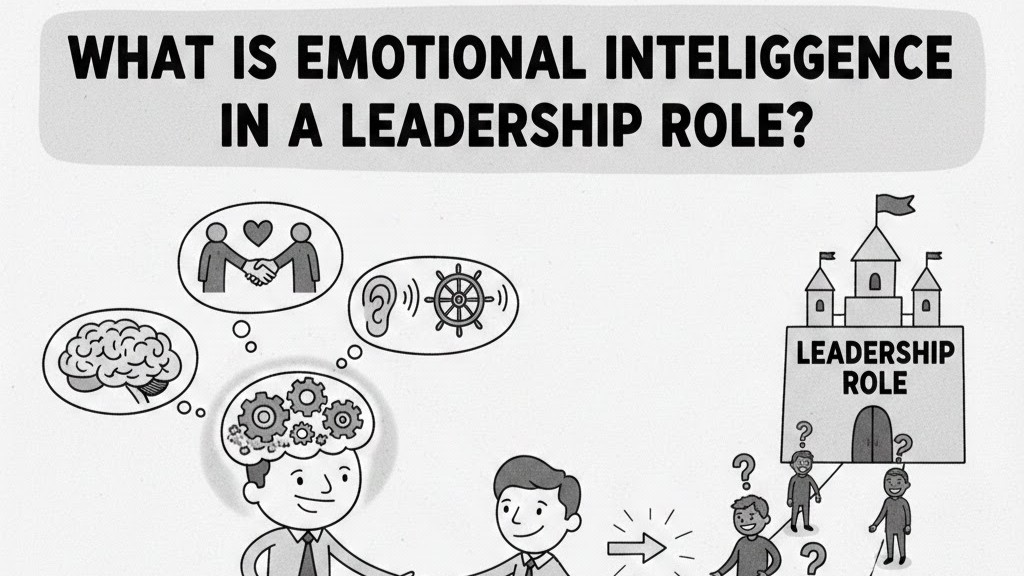
Technical expertise and industry experience are often what help professionals secure management positions. However, what separates good managers from exceptional, high-impact executives is Emotional Intelligence (EQ). In a leadership role, emotional intelligence is the ability to recognize, understand, manage, and leverage your own emotions while effectively navigating the emotions and interpersonal dynamics of your team members. Leaders with high EQ create psychological safety, foster trust, resolve conflicts calmly, and inspire top-tier performance—especially during times of organizational change and pressure.
As modern workplace structures shift toward hybrid collaboration, cross-functional project teams, and rapid technological transformation, traditional command-and-control leadership styles are rapidly losing efficacy. Leaders who master the core pillars of emotional intelligence—self-awareness, self-regulation, intrinsic motivation, empathy, and social skill—build resilient corporate cultures capable of navigating high-stakes market volatility. By accurately reading subtle interpersonal dynamics, managing cognitive overload under tight deadlines, and delivering constructive feedback without triggering defensive reactions, high-EQ executives minimize turnover, reduce operational friction, and align individual employee motivations directly with enterprise-level strategic goals.
The 5 Core Components of Emotional Intelligence in Leadership
The concept of emotional intelligence in leadership, popularized by psychologist Daniel Goleman, rests on five fundamental pillars. Each component plays a distinct role in how executives guide their teams:
1. Self-Awareness
Self-awareness is the foundation of emotional intelligence. It is the ability to recognize your own emotional triggers, strengths, weaknesses, values, and workplace tendencies.
Why it matters
Leaders who understand their emotional state can predict how their mood affects their team. They recognize when they are stressed or frustrated and prevent knee-jerk reactions from harming team morale.
Key Behavior
Seeking honest feedback from peers and acknowledging personal areas for growth without becoming defensive.
In executive environments, self-awareness acts as an internal feedback mechanism. Leaders operating with high self-awareness continually track their cognitive state during high-stakes negotiations and board-level meetings. By recognizing early physical and mental indicators of fatigue or frustration, they prevent emotional leakage into critical decision-making processes. This foundational clarity allows executives to evaluate their baseline capabilities objectively, delegate operational areas where their personal skill set is weak, and lead with transparent authenticity that earns long-term credibility across all organizational tiers.
2. Self-Regulation
Self-regulation is the practice of managing disruptive emotions and impulses. Rather than reacting impulsively to high-pressure situations, emotional leaders pause, reflect, and respond thoughtfully.
Why it matters
Leaders who stay calm under pressure project stability and confidence across the organization. They create an environment where employees feel safe discussing errors without fear of explosive outbursts.
Key Behavior
Remaining composed during crises, adapting smoothly to unexpected disruptions, and maintaining ethical standards.
Self-regulation converts volatile stress into controlled operational focus. In moments of acute organizational disruption, such as sudden market shifts, supply chain failures, or public relations emergencies, an unmanaged reaction from leadership can trigger widespread panic throughout the enterprise stack. High-EQ executives employ mental pause techniques that decouple raw emotional stimulus from their tactical response. This disciplined emotional composure establishes psychological containment across departments, ensuring that teams focus on systematic problem-solving rather than protective posturing or blame avoidance.
3. Internal Motivation
Highly emotionally intelligent leaders are driven by internal goals—such as personal growth, organizational excellence, and team empowerment—rather than purely external rewards like title, status, or short-term bonuses.
Why it matters
Internal passion is contagious. Leaders who demonstrate genuine dedication to a long-term vision motivate their employees to perform at higher levels.
Key Behavior
Maintaining optimism during setbacks, setting high standards for performance, and committing to continuous self-improvement.
Executives powered by internal motivation possess an enduring organizational vision that remains stable despite short-term market turbulence. They view operational setbacks not as existential failures, but as diagnostic feedback loops necessary for long-term refinement. This intrinsic drive manifests as persistent optimism, setting a cultural baseline that encourages teams to pursue ambitious benchmarks, maintain high performance standards, and dedicate energy toward continuous process optimization rather than doing the bare minimum required for compliance.
4. Empathy
Empathy is the capacity to understand the feelings, perspectives, and needs of others. In a leadership context, empathy does not mean agreeing with every opinion or avoiding tough choices; it means considering your team’s human perspective when making decisions.
Why it matters
Empathetic leaders build deep workplace trust. They recognize burnout early, understand team member motivations, and tailor their communication style to support individual growth.
Key Behavior
Active listening, acknowledging employee challenges, and offering constructive support rather than immediate judgment.
At an operational level, empathy functions as an advanced information-gathering asset. Leaders who actively evaluate the psychological state of their workforce can identify operational fatigue, systemic friction, and impending burnout long before these issues manifest as degraded output or resignations. Empathy enables executives to decode hidden organizational dynamics, uncover root causes of cross-departmental friction, and structure performance improvement interventions that address underlying human constraints while maintaining strict operational standards.
5. Social Skills
Social skills represent the culmination of EQ: using emotional awareness to build strong relationships, communicate effectively, manage conflict, and persuade others.
Why it matters
A leader with visionary ideas cannot succeed without the interpersonal capability to align teams around a shared goal.
Key Behavior
De-escalating workplace friction, communicating complex goals with clarity, and building collaborative cross-functional networks.
Social skills translate internal emotional control and interpersonal awareness into external organizational alignment. High-EQ leaders leverage sophisticated communication strategies to bridge functional silos, harmonize competing departmental priorities, and drive complex change management initiatives. They excel at managing stakeholder expectations, negotiating mutually beneficial outcomes across matrixed environments, and creating open communication architectures where feedback flows upwards without administrative friction.
Why Emotional Intelligence Is Essential for Modern Organizations
In today’s hybrid, fast-paced work environments, EQ is no longer just a “soft skill”—it is a core operational capability that impacts company performance directly:
- Increases Employee Engagement and Retention
- Enhances Crisis Resilience
- Improves Decision-Making Quality
- Drives Innovation and Psychological Safety
How to Develop Your Leadership Emotional Intelligence
Unlike fixed IQ, emotional intelligence can be cultivated through deliberate practice, self-reflection, and structured corporate coaching:
- ✔ Practice Active Listening
- ✔ Implement the “Pause” Rule
- ✔ Request 360-Degree Feedback
- ✔ Keep an Emotional Journal
Conclusion
Emotional intelligence in a leadership role is the bridge between individual strategy and collective achievement. While technical competence opens the door to leadership opportunities, EQ determines how effectively a leader can inspire, guide, and retain a high-performing team. By committing to self-awareness, empathy, and constructive communication, managers can transform their leadership style and drive sustained organizational growth.
Cultivating high emotional intelligence enables executives to build high-trust environments where innovation thrives, calculated risk-taking is embraced, and operational friction is resolved through empathetic problem-solving. Leaders who continuously refine their emotional acuity are better equipped to navigate organizational restructuring, manage stakeholder expectations, and maintain team morale during severe market volatility. Ultimately, prioritizing EQ across management tiers shifts corporate culture from transactional compliance to authentic commitment, ensuring that organizations not only meet immediate strategic targets but also establish a durable foundation for long-term talent retention and enterprise resilience.
FAQs
1. Can emotional intelligence be learned, or is it an inherent trait?
Emotional intelligence can definitely be learned and strengthened over time. Through conscious self-reflection, feedback, active practice, and targeted leadership coaching, individuals can significantly improve their EQ.
2. What is the main difference between IQ and EQ in leadership?
IQ (Intelligence Quotient) measures cognitive abilities, technical skill, and logical reasoning. EQ (Emotional Quotient) measures emotional awareness, empathy, self-control, and interpersonal communication. High IQ gets you hired, but high EQ gets you promoted.
3. How does high EQ improve team productivity?
High EQ leaders create psychological safety, reduce workplace conflict, communicate goals clearly, and support employee well-being. This leads to higher engagement, fewer sick days, and faster problem resolution.
4. How can a leader demonstrate empathy without being seen as weak?
Empathy is not about avoiding hard decisions or lowering standards; it is about understanding human perspectives while holding people accountable. Empathetic leaders deliver tough feedback and make hard choices with clarity, respect, and fairness.
5. Are emotional intelligence courses claimable under HRD Corp in Malaysia?
Yes. Companies registered with HRD Corp can claim corporate training expenses for accredited leadership development, communication, and emotional intelligence programs through the HRDC SBL-Khas scheme.