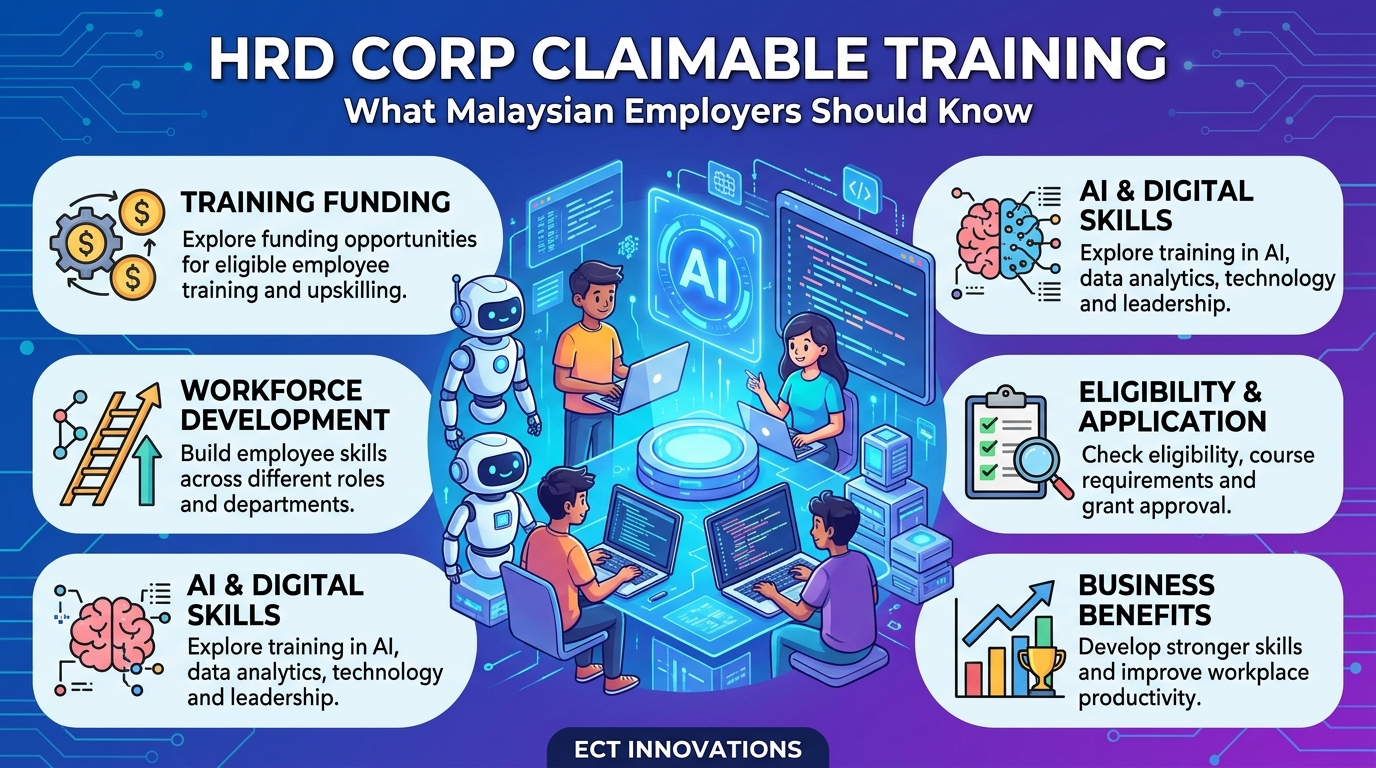
Employee training plays an important role in helping businesses develop skilled, productive and adaptable workforces. As workplace technologies and business requirements continue to evolve, organisations need to provide employees with opportunities to improve their knowledge and professional capabilities.
However, training costs can be a consideration for businesses, especially those planning to train employees across multiple departments.
For eligible employers in Malaysia, HRD Corp claimable training offers a way to explore funding support for employee development through applicable training schemes.
Understanding the eligibility requirements, application procedures and available training options can help businesses make informed decisions when planning their workforce development strategies.
What Is HRD Corp Claimable Training?
HRD Corp claimable training refers to eligible training programmes that employers can apply to fund through relevant Human Resource Development Corporation (HRD Corp) schemes, subject to the applicable requirements and approval.
These schemes support employee training and development by helping eligible employers invest in skills that are relevant to their business operations.
Depending on the selected scheme, training may cover different areas, including:
- Digital skills and technology
- Data analytics and business intelligence
- Artificial intelligence and automation
- Leadership and management
- Communication and interpersonal skills
- Microsoft Office applications
The eligibility of each programme depends on the applicable scheme requirements. Employers should confirm the course’s current status and funding conditions before making training arrangements.
Why Is HRD Corp Claimable Training Important for Businesses?
Employee development helps organisations improve workforce capabilities and respond to changing business demands.
Without appropriate training, employees may struggle to keep up with new technologies, workplace processes and the skills required for their roles.
HRD Corp funding schemes can help eligible employers explore financial support for suitable training programmes.
With proper planning, businesses can use training to:
- Improve employee knowledge and practical skills
- Address existing workforce skills gaps
- Support digital transformation initiatives
- Strengthen management and leadership capabilities
- Improve workplace efficiency
- Prepare employees for changing job requirements
Training should be selected according to actual business needs rather than simply because a programme is available.
Who Can Apply for HRD Corp Claimable Training?
Eligibility depends on the funding scheme and the employer’s circumstances.
Employers should review their registration status, applicable levy requirements and the conditions associated with the programme they intend to use.
They should also confirm whether the selected training course, delivery method and participating employees meet the relevant requirements.
Businesses that are unsure about their eligibility should consult the latest HRD Corp guidelines before submitting an application.
What Types of Training Can Employers Consider?
Different businesses have different training priorities. The most suitable programme depends on the skills employees need and the organisation’s long-term objectives.
Digital Skills and Technology Training
Digital skills training can help employees use workplace applications and technology more effectively.
Courses may cover Microsoft Excel, Microsoft 365, Power BI and other digital tools used for reporting, data management and everyday business activities.
These skills can help employees organise information, prepare reports and improve their confidence when working with digital systems.
Artificial Intelligence and Automation Training
AI training can introduce employees to the practical applications of artificial intelligence in the workplace.
Depending on the programme, employees may learn about generative AI tools, AI-assisted content creation, responsible AI usage and workflow automation.
This can help organisations understand how emerging technologies may support their operations.
Data Analytics and Business Intelligence
Data analytics training helps employees develop skills in analysing information, preparing reports and presenting findings.
Businesses may consider programmes covering data visualisation, dashboard development and business intelligence tools.
These capabilities can help teams interpret business information and support more informed decision-making.
Leadership and Professional Skills
Leadership, communication and management training can help employees strengthen their professional capabilities.
These programmes may support better team coordination, decision-making, workplace communication and people management.
Employers should select courses that address the actual development needs of their employees.
How Does the HRD Corp Training Application Process Work?
Employers should begin by identifying their training objectives and selecting a suitable programme that meets the requirements of the relevant HRD Corp scheme.
The general process involves:
- Identifying employee training needs
- Selecting a suitable training provider and course
- Reviewing eligibility and applicable funding requirements
- Preparing the necessary supporting documents
- Submitting the required application through the relevant HRD Corp system
- Obtaining the required approval before training begins
- Completing the programme and following the applicable claim procedures
For the HRD Corp Claimable Courses scheme, employers should check the latest application deadlines and documentation requirements.
Submitting a grant application does not automatically guarantee approval. Employers should confirm the current requirements for their selected scheme before committing to training expenses.
What Should Employers Look for in a Training Provider?
Choosing an appropriate training provider is an important part of planning effective employee development.
Employers should look for providers that offer relevant course content, experienced trainers and practical learning activities suited to workplace requirements.
Other considerations include:
- Clear learning objectives
- Suitable training levels
- Relevant course materials
- Practical workplace examples
- Appropriate delivery formats
- Transparent course information
- Confirmation of applicable HRD Corp requirements
A suitable training programme should help employees develop skills they can apply to their daily responsibilities.
How Can Companies Make Employee Training More Effective?
Training becomes more valuable when employees can apply what they have learned to real workplace situations.
Companies should identify specific skills gaps before selecting courses and communicate clear learning objectives to participants.
For example, employees attending data analytics training may practise preparing reports, analysing business information or developing dashboards relevant to their roles.
Managers can also encourage employees to apply their new skills after training and identify areas that require further development.
This approach helps organisations connect training activities with their broader business objectives.
What Are the Benefits of HRD Corp Claimable Training?
When the relevant requirements are met, HRD Corp funding schemes can help eligible employers explore support for employee development.
Structured training may also provide several workforce benefits.
Improved Employee Capabilities
Training helps employees develop knowledge and practical skills that are relevant to their responsibilities.
Better Workplace Productivity
Employees who understand the tools and processes used in their roles may be able to complete tasks more efficiently.
Stronger Digital Readiness
Technology and AI training can help employees adapt to new workplace tools and digital processes.
More Structured Workforce Development
Businesses can use training plans to address skills gaps and prepare employees for future responsibilities.
The actual results depend on the relevance of the programme, employee participation and opportunities to apply the skills acquired.
Common Mistakes Employers Should Avoid
Businesses should avoid assuming that every course or training expense is automatically eligible for funding.
Before proceeding, employers should verify the selected programme’s eligibility and understand the relevant application and claim requirements.
Incomplete documentation, missed deadlines and starting training before the required approval may also create avoidable complications.
It is equally important to choose training based on genuine employee development needs rather than focusing only on funding availability.
Careful preparation can help businesses manage their training plans more effectively.
Why HRD Corp Claimable Training Matters for Malaysian Employers
As Malaysian businesses continue to develop their digital capabilities and professional workforce, employee training remains an important part of long-term business planning.
HRD Corp funding schemes provide eligible employers with an avenue to explore support for relevant training programmes.
By understanding the requirements and selecting courses that align with organisational priorities, businesses can develop a more structured approach to employee learning.
The objective should be to build a workforce with the knowledge, confidence and practical skills needed to meet evolving business demands.
Conclusion
HRD Corp claimable training can help eligible Malaysian employers explore funding support for employee development while strengthening workplace capabilities.
Understanding the applicable eligibility requirements, selecting suitable courses and following the correct application procedures are important steps in planning an effective training programme.
Businesses should focus on training that addresses genuine skills gaps and supports their long-term objectives.
With careful planning and an appropriate training provider, organisations can make employee development a more practical and valuable part of their business strategy.
FAQs
1.What is HRD Corp claimable training?
HRD Corp claimable training refers to eligible training programmes that employers can apply to fund through relevant HRD Corp schemes, subject to the applicable requirements and approval.
2.Are all training courses claimable under HRD Corp?
No. Eligibility depends on the relevant funding scheme, employer requirements and the selected programme. Employers should confirm the current requirements before enrolling employees.
3.What types of training can employers consider?
Depending on the programme and applicable scheme, employers may consider digital skills, data analytics, AI, leadership, management and communication training.
4.How do employers apply for HRD Corp training grants?
Employers should identify a suitable programme, review eligibility, prepare the required documents and submit the application through the relevant HRD Corp system. The required approval must be obtained in accordance with the selected scheme’s rules.
5.Can small and medium-sized enterprises benefit from employee training?
SMEs may explore suitable training opportunities if they meet the relevant scheme requirements. The available funding and eligibility conditions should be checked directly with HRD Corp.