Workplace security has become increasingly important as businesses face growing challenges related to unauthorized access, asset protection, employee safety, and operational efficiency. In an era where physical and digital boundaries continuously overlap, traditional locks and physical keys are no longer enough to meet the complex security demands of modern workplaces. Physical keys can be misplaced, duplicated without authorization, or stolen, creating significant vulnerabilities that compromise entire facilities. Furthermore, traditional locking mechanisms offer zero visibility into who enters a facility, when they enter, or where they go once inside.
Access control systems provide businesses with a smarter, highly reliable, and far more effective way to manage who can enter specific areas, when they can enter, and what resources they can access. These advanced security solutions help organizations strengthen physical security while simultaneously improving day-to-day administrative operations. Modern access control systems can centralize access management, monitor activity across multiple entry points in real time, and eliminate the inherent security risks associated with traditional physical keys. By transitioning to a digital framework, organizations can build dynamic security policies that adapt rapidly to operational changes, shifting threat environments, and workforce fluctuations.
What Is an Access Control System?
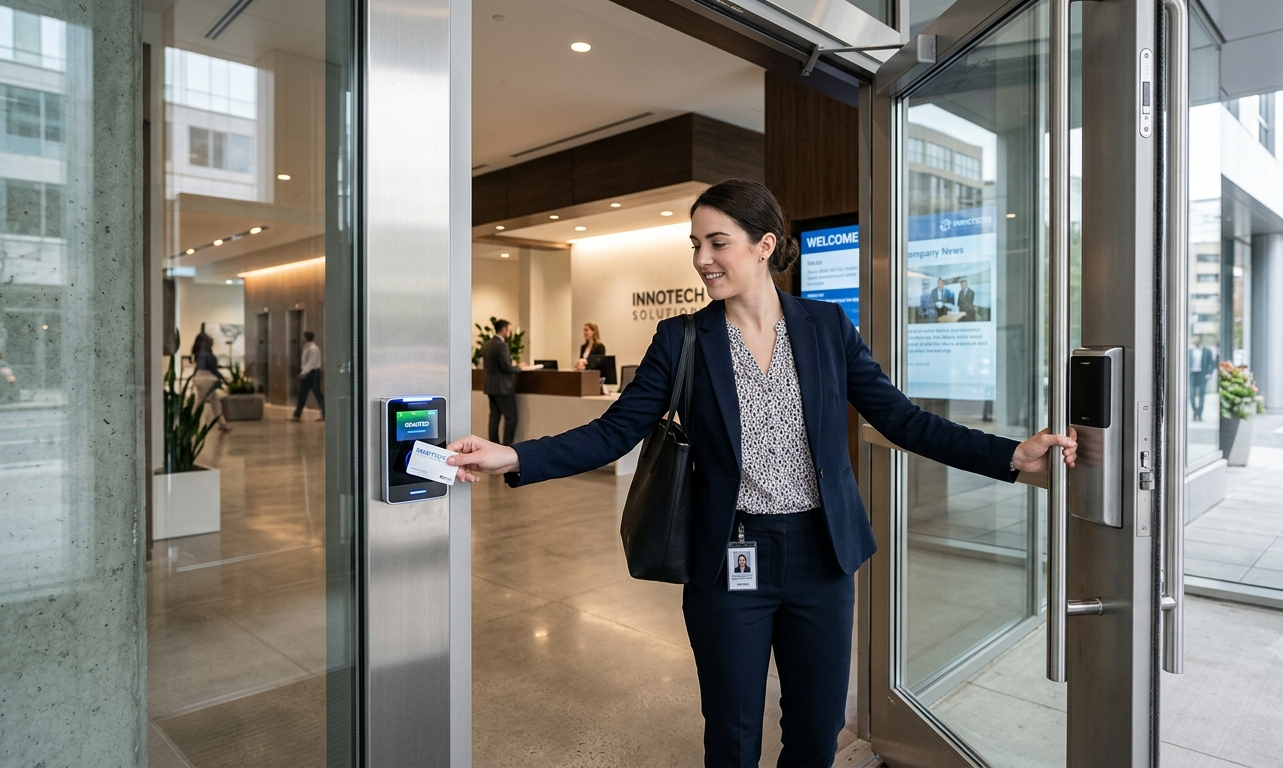
An access control system is a comprehensive security solution designed to regulate, track, and restrict entry to buildings, offices, and high-security areas. Operating as an electronic gatekeeper, it authenticates identity before granting physical access to protect sensitive environments 24/7.
Instead of relying on physical keys, access is granted through modern credentials, including:
-
Access cards
-
PIN codes
-
Mobile credentials
-
Biometric verification
-
Digital authentication systems
Modern cloud-based access control allows businesses to modify or revoke access permissions instantly across an enterprise, eliminating the need to replace mechanical locks or issue physical keys.
Prevents Unauthorized Access
A primary benefit of modern access control is restricting entry strictly to authorized personnel, preventing theft, property loss, and safety risks. Electronic controls establish clear boundaries around sensitive spaces to stop unauthorized access before it happens.
Businesses can define granular access parameters based on:
-
Employee roles
-
Department requirements
-
Security clearance levels
-
Working hours
This structured approach protects sensitive areas—such as server rooms, executive offices, storage facilities, research labs, and data centers—by limiting employee access strictly to required zones and minimizing exposure across the organization.
Eliminates Risks Associated With Physical Keys
Traditional mechanical keys present severe and ongoing security challenges for modern organizations. When a physical key is lost or stolen, rectifying the issue often requires rekeying every lock in the facility and reissuing keys to every employee—a process that is both costly and time-consuming.
Physical keys present persistent operational liabilities because they can be:
-
Lost
-
Stolen
-
Copied
-
Shared without authorization
Digital access control systems eliminate these vulnerabilities by allowing administrators to disable lost or compromised credentials instantly via a central dashboard. This immediately renders credentials useless, reducing security risks, avoiding rekeying expenses, and maintaining absolute control over building entry points.
Provides Real-Time Monitoring and Detailed Auditing
Modern access control systems provide continuous visibility, eliminating the blind spots left by traditional door locks. By logging every entry point interaction in real time, electronic platforms make it fast and straightforward to investigate policy violations, internal theft, or security breaches.
Organizations can monitor and log critical events, including:
-
Who entered a specific area
-
Entry and exit times
-
Access attempts
-
Unauthorized access events
This real-time visibility enables security teams to identify threats immediately and equips managers with data logs for compliance audits, internal investigations, and operational reviews.
Improves Employee Safety and Workplace Culture
Employee safety is a top priority for every modern organization. Creating a safe physical environment directly impacts employee morale, productivity, and retention. Access control systems contribute significantly to a secure workplace culture by ensuring that unvetted individuals cannot enter the premises freely.
Access control systems improve overall safety by:
-
Restricting entry to hazardous areas
-
Managing visitor access
-
Supporting emergency procedures
-
Enhancing building security
By maintaining strict control over movement within a facility, businesses create a safe, reassuring environment for employees, clients, and visitors alike. Employees can focus on their tasks knowing that the physical environment is actively monitored and protected against unauthorized intrusions.
Supports Emergency Response and Life Safety Protocols
During critical emergency situations, such as fires, active security threats, severe weather, or hazardous materials spills, access control systems play a life-saving role. Relying on manual locks during an emergency can lead to confusion, delay evacuations, and put lives at risk.
Advanced electronic access control features include:
-
Emergency lockdown procedures
-
Automatic door unlocking
-
Occupancy tracking
-
Controlled evacuation routes
These integrated capabilities ensure that businesses can respond decisively during high-stress security incidents or natural disasters. By facilitating quick egress while controlling incoming access, access control platforms significantly reduce response times and mitigate safety risks during critical events.
Reduces Insider Security Risks and Protects Assets
While external threats often receive the most attention, security risks arising from within an organization pose an equally damaging threat. Insider threats—whether intentional or accidental—can result in stolen intellectual property, leaked customer data, destroyed equipment, or compromised financial records.
Access control systems mitigate insider security risks by:
-
Limiting access privileges
-
Recording access activity
-
Creating accountability
-
Monitoring sensitive areas
When physical access is strictly regulated and meticulously logged, employees are less likely to breach internal protocols. Should an incident occur, management can easily review entry records to identify responsible parties, helping businesses safeguard valuable physical and digital assets.
Simplifies Visitor Management and Vendor Handling
Managing visitors, contractors, delivery personnel, and temporary clients using manual sign-in sheets is inefficient and fraught with security gaps. Paper logbooks are easily forged, hard to read, and fail to prevent visitors from wandering unescorted into restricted facility areas.
Modern access control systems revolutionize visitor management by allowing businesses to:
-
Register visitors efficiently
-
Provide temporary credentials
-
Track visitor movement
-
Automatically revoke access when visits end
This automation enhances front-desk operational efficiency while establishing strict control over temporary occupants. Organizations maintain a professional image while upholding rigid security standards for every guest entering the premises
Increases Operational Efficiency and Onboarding Speed
Beyond physical protection, access control systems act as powerful drivers of operational efficiency. Managing security across large facilities using traditional methods creates immense administrative overhead for HR, security, and facility management teams.
Key operational benefits include:
-
Centralized management
-
Faster onboarding processes
-
Simplified employee access management
-
Reduced administrative workload
Many forward-thinking organizations view access control not just as a defensive security expenditure, but as an essential operational management tool that streamlines workflows, cuts labor costs, and simplifies daily facility administration.
Supports Business Growth and Multi-Site Operations
As companies expand their operations, open new branches, or acquire additional real estate, maintaining consistent security policies becomes increasingly complex. Fragmented systems force managers to maintain separate databases, credentials, and software platforms for every building.
Modern access control solutions offer scalable architecture tailored for growth:
-
Scalable infrastructure
-
Multi-site management
-
Cloud-based administration
-
Flexible access permissions
Whether a business operates out of a single regional office or manages dozens of facilities worldwide, modern access control systems provide the scalability required to maintain seamless security across every site.
Signs Your Workplace Could Benefit From Access Control
Recognizing when it is time to upgrade facility security is essential for preventing incidents before they occur. Continuing to rely on outdated infrastructure leaves businesses exposed to unnecessary liabilities.
Businesses should evaluate an upgrad
✔ Lost or duplicated keys
✔ Difficulty managing employee access
✔ Sensitive areas requiring restricted entry
✔ Security incidents or unauthorized access
✔ Growing workforce or multiple locations
✔ Increased compliance requirements
Experiencing any of these issues indicates that traditional locks are no longer sufficient and that a modern access control platform is necessary.
Conclusion
Access control systems have evolved from a luxury security measure into an essential foundation of modern workplace security. By regulating entry, tracking movement in real time, enhancing employee safety, supporting emergency protocols, and optimizing operational workflows, these platforms deliver unmatched protection for people, physical assets, and proprietary information.
As workplace security threats continue to grow more sophisticated, investing in an integrated access control system ensures your organization remains resilient, compliant, and prepared. Implementing a modern solution empowers businesses to build a safe, secure, and productive environment that supports long-term operational success.
FAQs
1. What is an access control system?
An access control system is an electronic security platform designed to manage and monitor entry into buildings, suites, individual rooms, and restricted areas. By replacing traditional mechanical locks with electronic readers, organizations grant entry via cards, mobile devices, PINs, or biometrics, ensuring only authorized individuals enter designated spaces.
2. How do access control systems improve physical safety?
Access control systems enhance safety by keeping unauthorized visitors off the premises, restricting entry to dangerous machinery or chemical storage zones, and providing automated features like central lockdowns and rapid emergency door releases during crisis events.
3. Can access control systems replace traditional keys completely?
Yes, modern access control systems eliminate the need for physical keys entirely. Keyless authentication eliminates common security hazards such as unauthorized key copying or lock rekeying costs, as access credentials can be added, modified, or revoked instantly through a digital interface.
4. When should a business upgrade to a modern access control system?
A business should consider an upgrade if it frequently manages lost keys, experiences difficulty managing permissions for new or departing employees, requires detailed audit logs for regulatory compliance, or is expanding across multiple physical locations.
5. What happens after installing an access control system?
Following installation, system administrators manage all security parameters via centralized management software or a cloud dashboard. Administrators can configure user access levels, establish customized schedules, review live entry logs, grant temporary guest passes, and adjust permissions remotely from any device.