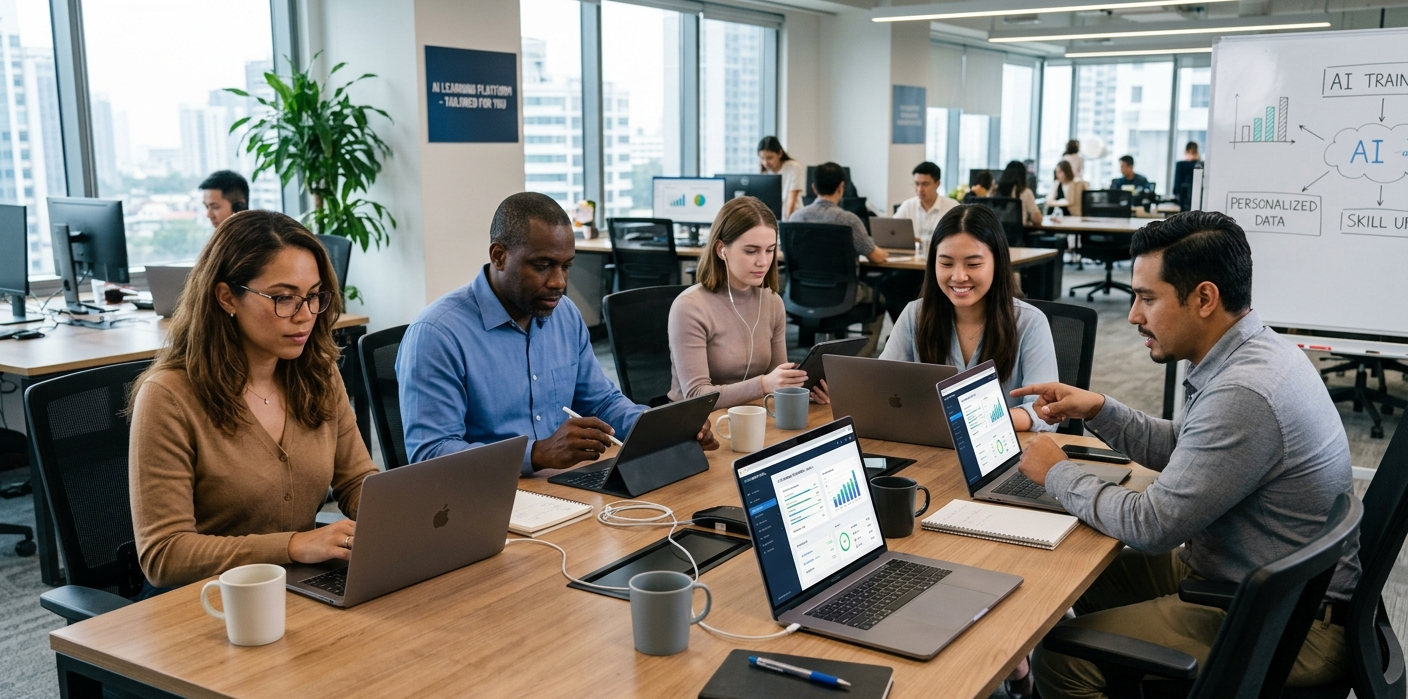
As technology continues to evolve, businesses must ensure their employees keep up with new skills and tools. Artificial intelligence (AI) is playing a major role in helping organizations train and develop their workforce more efficiently. By using AI-powered learning systems, companies can personalize training, identify skill gaps, and support continuous learning for employees.
Employee upskilling refers to the process of teaching workers new abilities that improve their performance and prepare them for future roles. With AI becoming increasingly integrated into core business operations, organizations are turning to AI-driven solutions to make workforce training faster, smarter, and far more effective.
What Is AI-Powered Employee Upskilling?
AI-powered employee upskilling integrates intelligent algorithms, machine learning models, and real-time data analytics directly into corporate learning and development (L&D) frameworks.
Rather than relying on outdated, one-size-fits-all training modules, intelligent learning platforms analyze individual employee capabilities, career aspirations, and daily operational outputs. Key elements of modern AI-driven upskilling include:
- Dynamic Skill Assessment
- Contextual Content Curation
- Adaptive Learning Progression
- Automated Competency Mapping
This structural evolution ensures workforce development transitions from a passive human resources requirement into an active engine for enterprise agility.
Why AI Is Important for Employee Upskilling
Modern businesses operate in fast-paced markets where skill requirements shift rapidly. Traditional corporate training programs often lag behind these technological advances. AI bridges this gap by offering adaptive, intelligent learning environments tailored to enterprise requirements.
Personalized Learning Paths
- AI analyzes employee data such as current skills, job responsibilities, and learning progress to recommend customized training programs.
- Algorithms eliminate redundant material that employees have already mastered, saving valuable work hours.
- Tailored content matches individual learning styles, whether an employee prefers text summaries, video tutorials, or interactive quizzes.
- Personalized development paths increase employee engagement, course completion rates, and knowledge retention.
Identifying Skill Gaps
- AI tools examine workforce data to highlight specific areas where employees lack critical operational skills.
- Diagnostic algorithms detect emerging skill shortages across entire departments before they impact project timelines.
- Automated gap analysis enables human resources teams to build targeted training programs that align directly with long-term business goals.
- Leadership gains real-time visibility into the organization’s technical strengths and operational vulnerabilities.
Continuous Learning and Feedback
- AI-powered systems track employee progress and provide instant feedback during interactive training sessions.
- Real-time corrections encourage immediate performance improvement and help employees identify strengths and weaknesses quickly.
- Continuous micro-learning modules deliver bite-sized lessons directly into daily workflows, minimizing workplace disruption.
- Automated tracking systems offer managers transparent metrics regarding team upskilling milestones without manual reporting.
Increased Productivity
- AI automates routine administrative tasks, freeing up employee time for professional development and strategic initiatives.
- Workers apply newly acquired skills directly to their daily responsibilities, accelerating project execution speeds.
- On-demand AI coaching reduces the time employees spend waiting for senior staff or managers to answer technical questions.
- Optimized workflow learning minimizes time away from core business operations while maximizing overall skill acquisition.
Comprehensive Framework: AI vs. Traditional Upskilling
Understanding the differences between legacy training models and modern AI-driven platforms highlights why organizations are accelerating their investment in intelligent learning tools:
Legacy Corporate Training Models
- Static Content Delivery
- Infrequent Skill Assessments
- High Administrative Overhead
- Broad, General Content
- Reactive Skill Gap Management
Modern AI-Driven Upskilling Systems
- Adaptive Personalized Learning
- Real-Time Skill Analytics:
- Automated Workflow Integration
- Micro-Targeted Content
- Proactive Talent Planning
Key Benefits of AI-Driven Upskilling Programs
Businesses adopting AI for employee training experience clear advantages across all operational levels:
- More Efficient Learning Processes
- Improved Employee Engagement and Motivation
- Better Alignment Between Skills and Goals
- Higher Productivity and Innovation
- Enhanced Workforce Retention
- Reduced External Hiring Expenses
Pratical Applications of AI in Workplace Training
AI is already being used in various ways to enhance employee development across leading global organizations:
AI-Powered Learning Platforms
- These systems analyze performance metrics to recommend relevant courses, articles, and training materials automatically.
- Adaptive algorithms curate personalized content feeds based on an employee’s career goals and team objectives.
- Integrated skill tracking monitors competency growth and issues digital certifications upon module completion.
Virtual Assistants and Chatbots
- AI chatbots guide employees through onboarding sequences, answer policy questions, and resolve technical queries instantly.
- Conversational assistants act as 24/7 learning coaches, offering real-time guidance during complex software tasks.
- Automated support reduces the administrative burden on HR teams and senior staff members.
Simulation-Based Training
- Advanced AI-powered simulations allow employees to practice high-stakes scenarios in safe, virtual environments.
- Machine learning engines generate dynamic customer interactions for sales teams and support representatives.
- Technical workers practice equipment troubleshooting and software management using virtual simulations before touching live systems.
Predictive Career Pathing
- AI platforms analyze internal mobility trends to map potential career trajectories for individual employees.
- Systems identify the specific competencies required for prospective promotions and automatically recommend relevant training.
- Promotes internal talent mobility while helping organizations build robust leadership pipelines from within.
Implementation Roadmap for Enterprises
Deploying AI for workforce upskilling requires a structured, multi-phase strategy to ensure seamless integration and high employee adoption:
1. Assessment and Strategy Alignment
- Identify current organizational skill gaps and define clear business objectives for the upskilling initiative.
- Audit existing learning management systems (LMS) and data infrastructure to ensure compatibility with modern AI platforms.
- Establish key performance indicators (KPIs), such as course completion rates, time-to-competency metrics, and productivity gains.
2. Platform Selection and Integration
- Choose enterprise-grade AI learning software that offers robust data privacy, encryption, and scalability.
- Connect AI learning tools directly with current employee communication platforms, HR systems, and project management tools.
- Ingest corporate domain knowledge, style guides, and internal documentation to train custom recommendation engines.
3. Pilot Launch and Employe Onboarding
- Roll out the AI upskilling program to a targeted pilot group, such as a specific department or technical team.
- Provide clear training on how employees can leverage AI coaches, personalized dashboards, and micro-learning features.
- Gather quantitative feedback and qualitative survey responses to refine system configurations and content recommendations.
4. Full Scale-Out and Continuous Optimization
- Expand the AI upskilling platform across all departments, setting clear personal development goals for all team members.
- Review real-time analytics regularly to identify top-performing modules and adjust learning paths based on evolving business needs.
- Recognize and reward employees who complete advanced skill tracks to foster a culture of continuous learning.
Addressing Challenges in AI Upskilling
While AI-driven learning platforms offer substantial advantages, organizations must anticipate potential implementation challenges:
- Overcoming Employee Resistance
- Ensuring Data Privacy and Security
- Maintaining Content Quality
- Balancing Tech with Human Leadership
The Future of Workforce Development
As industries continue adopting advanced AI technologies, the demand for digital skills will grow rapidly. Organizations that invest in employee upskilling today will be better prepared for future operational challenges and market shifts.
AI does not replace human workers — instead, it helps them become more capable, efficient, and adaptable. By combining intelligent technology with continuous professional development, companies can build a resilient workforce ready to thrive in an evolving digital economy.
Conclusion
AI is transforming how companies train and develop their workforce, making learning more personalized, efficient, and scalable. By leveraging AI-powered tools, businesses can identify critical skill gaps, deliver targeted training, and empower employees to adapt continuously to new industry standards.
Organizations that invest in AI-driven upskilling today will secure a distinct competitive edge, building agile, future-ready teams capable of driving sustained innovation. If you want to empower your workforce with smarter, highly scalable training solutions, contact ECT Innovations today for expert guidance — and start building a future-ready team with AI-powered employee upskilling!
FAQs
1. What is AI for employee upskilling?
AI for employee upskilling uses artificial intelligence and machine learning tools to evaluate worker competencies, customize training pathways, automate learning workflows, and accelerate professional skill development across an organization.
2. How does AI help identify workforce skill gaps?
AI tools analyze employee performance data, project deliverables, and assessment metrics to detect individual and department-wide competency gaps, enabling HR teams to deliver targeted training programs.
3. Does AI upskilling replace human corporate trainers?
No. AI automates routine administrative tasks, tracks progress, and delivers personalized content, allowing human trainers and managers to focus on high-level coaching, strategic mentorship, and team leadership.
4. How does personalized learning improve employee retention?
Personalized learning delivers relevant, engaging training that aligns with an employee’s specific career goals. When workers see clear opportunities for internal professional growth, job satisfaction increases and turnover decreases.
5. What types of businesses benefit from AI-driven training?
Organizations of all sizes across technology, healthcare, finance, manufacturing, customer service, and retail benefit from AI upskilling by shortening training timelines and adapting to changing industry regulations.